Archivi di nature inesistenti | 2024
A participatory art project involving teenagers who have dropped out of school and are experiencing social withdrawal.
I facilitated the workshop together with Serena Ricci, a psychologist.
Over the course of a year, we created a landscape archive.
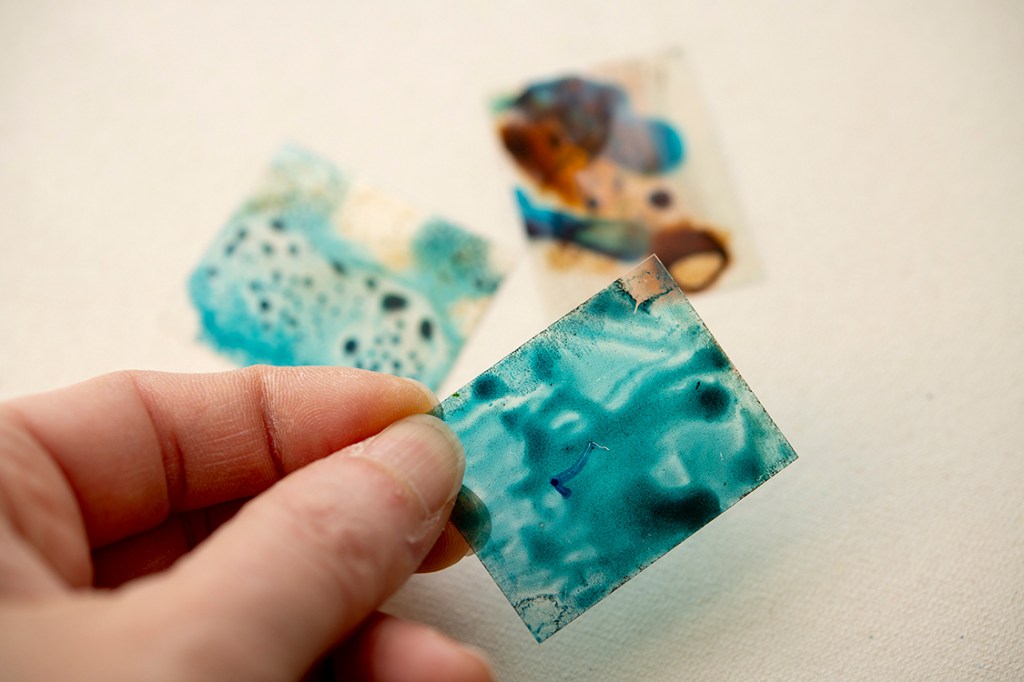
Our archive merges different kinds of places:
Some we were able to physically explore, using the camera as a protective tool, as well as imaginary landscapes that we created by staining 24×36 mm acetate films with liquid acrylic paint.
The acetate films were then projected on a large scale using an analog slide projector. I photographed the projections and printed them.
I then created two archival notebooks by sewing photographs onto old notebooks, in an act of mending and mending the moment we were living.
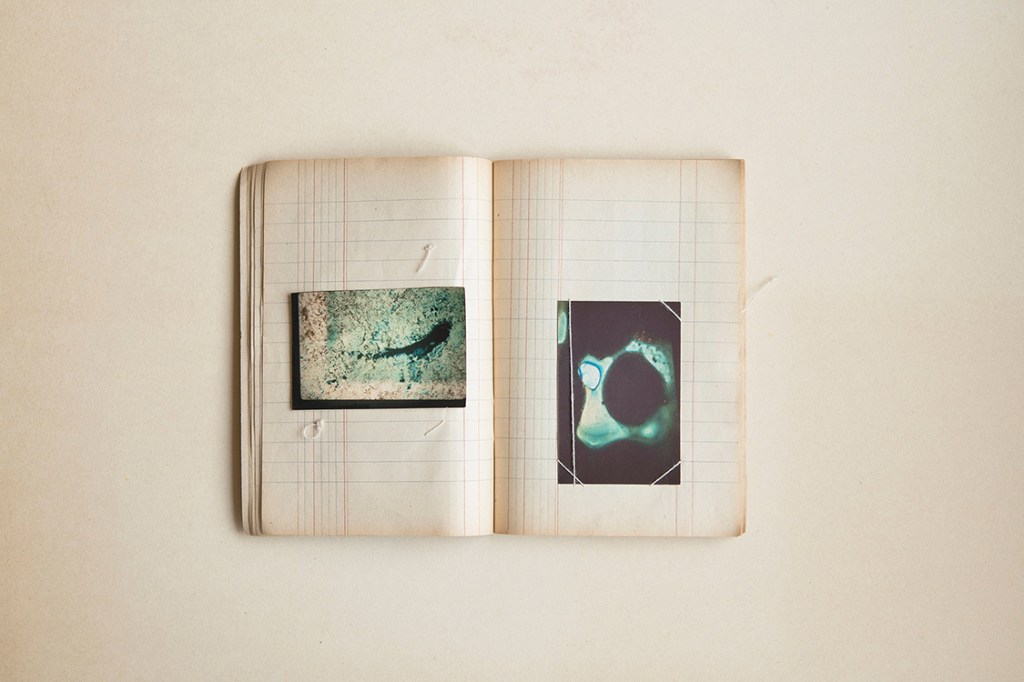
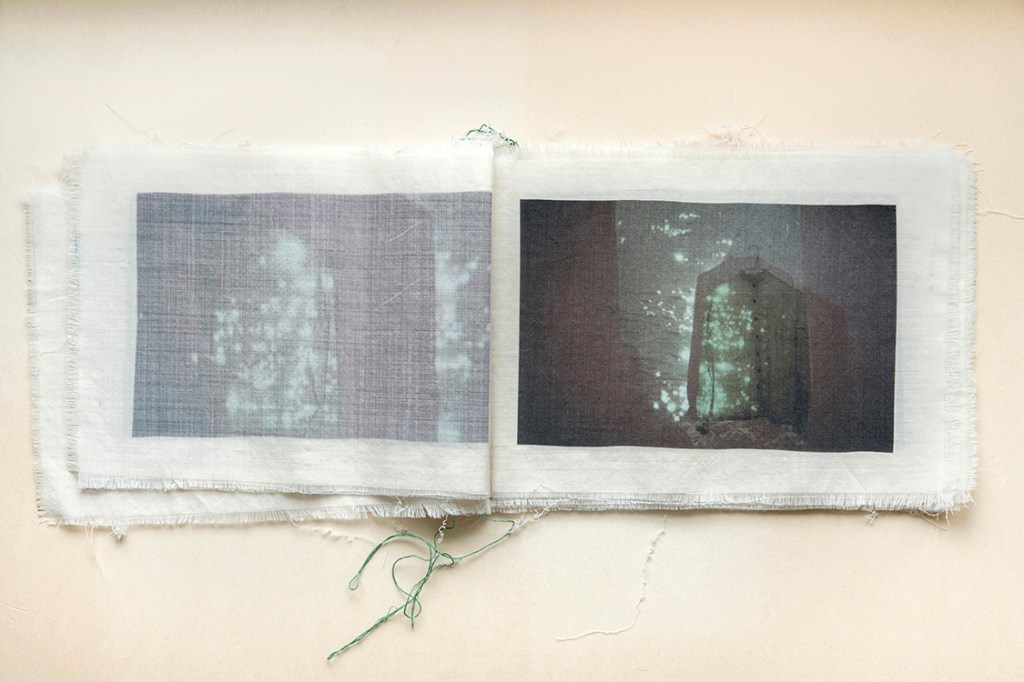
This is another notebook I created for the archive. It contains the photographs that we took together. I decided to print the notebook on cotton gauze, since it is a material that protects and heals skin when injured.
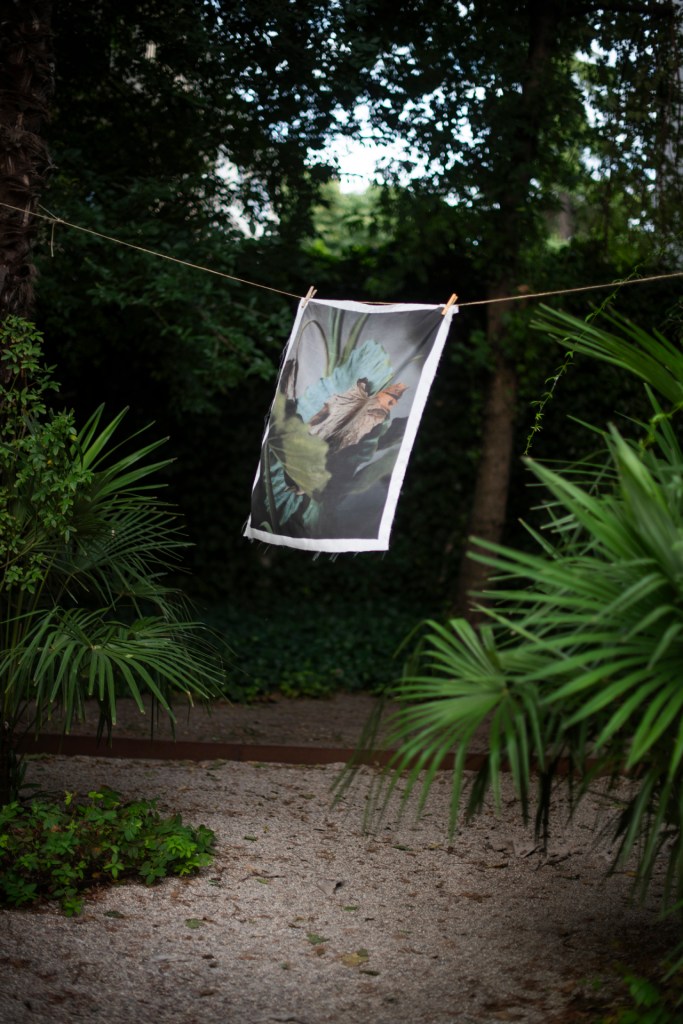
During two exhibitions in Padua – at Libreria Zabarella and at the Spazio Carta Bianca exhibition space in Albignasego – I printed the photographs on fabric to create installations that interacted with the surrounding environment and that the public could freely touch and walk through.

Io sono | from the workshop SE FOSSI, anche inventare nomi è una cosa seria | 2024
Io sono is an artist’s book that I hand-sewed with upcycled fabric, developed from the participatory workshop Se Fossi | anche inventare nomi è una cosa seria with 11-year-old students at their school in Noale (Venezia).
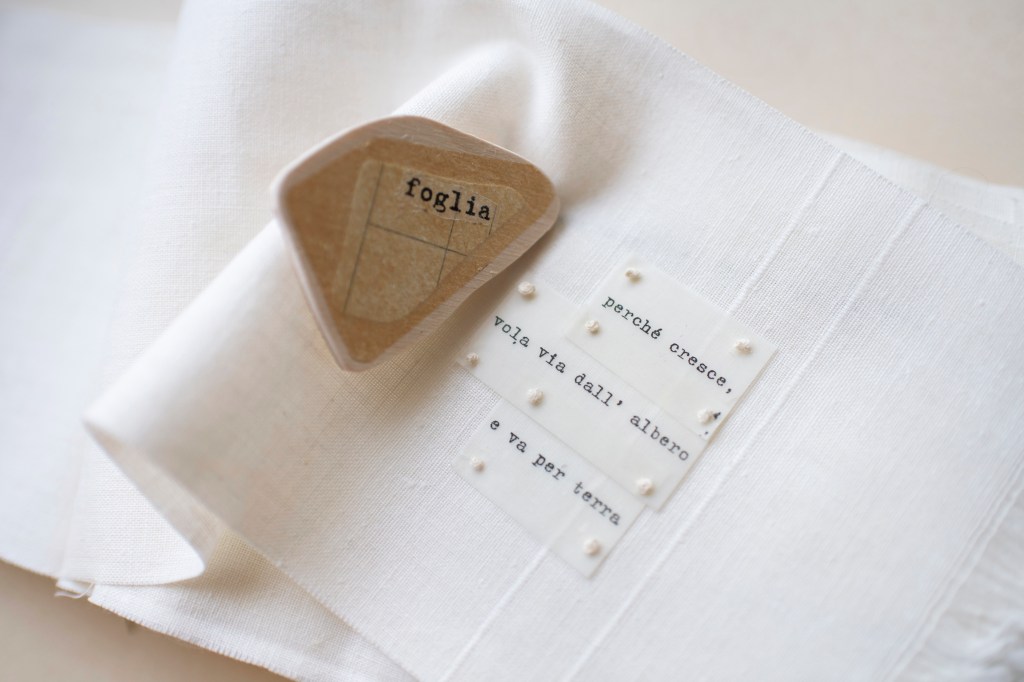
Chiara Pattaro, their art teacher, led the workshop alongside me.
We worked on metaphor as a tool to help us understand what has no clearly defined boundaries, therefore everything related to our identity and our emotions.
The workshop began with the reading of the novel Morris by Bart Moeyaert, illustrated by Sebastiaan Van Doninck, serving as a training ground and a safe space for dialogue, where the world could be made smaller, more welcoming, and within our reach, in order to foster the development of counterfactual thinking and an empathic attitude toward understanding others’ perspectives.
In the novel, the protagonist suffers violence at the hands of an acquaintance of his grandmother.
Throughout the story, Morris often reflects on words—those that make him feel better (for example, when his grandmother calls him “Superman,” he feels broader in the shoulders) and those that cause him pain (for example, when he is called “poor thing” or “little poor boy”).
I asked the boys and girls in the class which words made them feel good, and which ones hurt them when someone used them toward them.
I wrote the words they love on pins, which readers of the book can take and wear. I made the pins by hand and chose wood for its nature as a living, constantly evolving material.
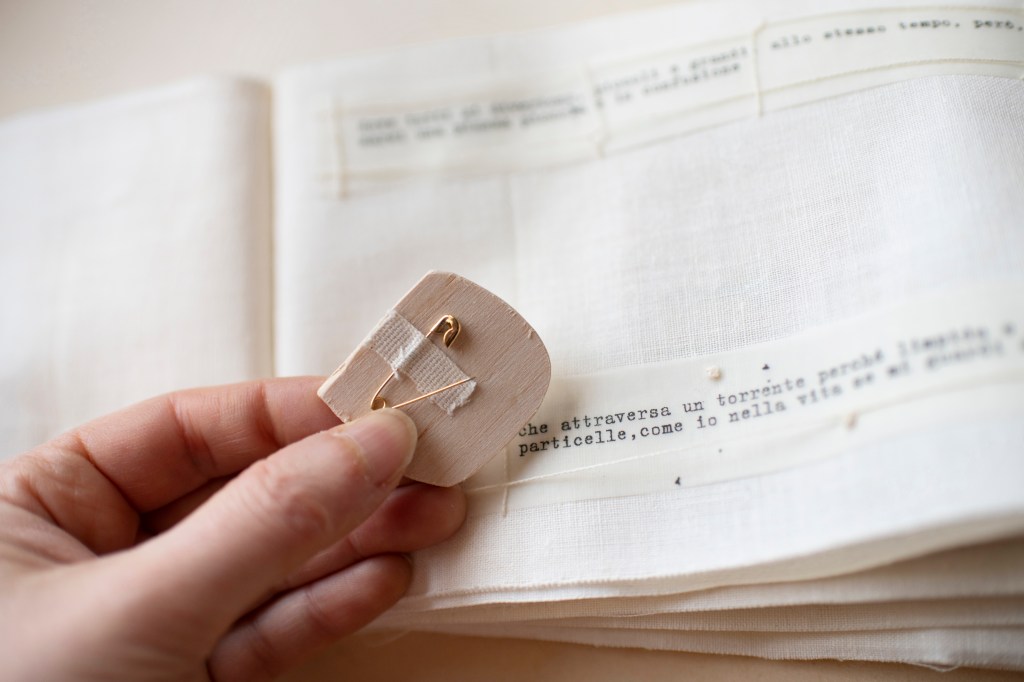
In the image below, you can see what a boy said: he wanted to be an everyday object so that he wouldn’t be thrown away.

The result is a generational portrait, which starts from how they don’t like to be defined, arriving at how they would feel if they were an object, an animal, a natural element or a place in the world.
This is a sheet of tissue paper hidden at the bottom of the tissue book, in a protected pocket.
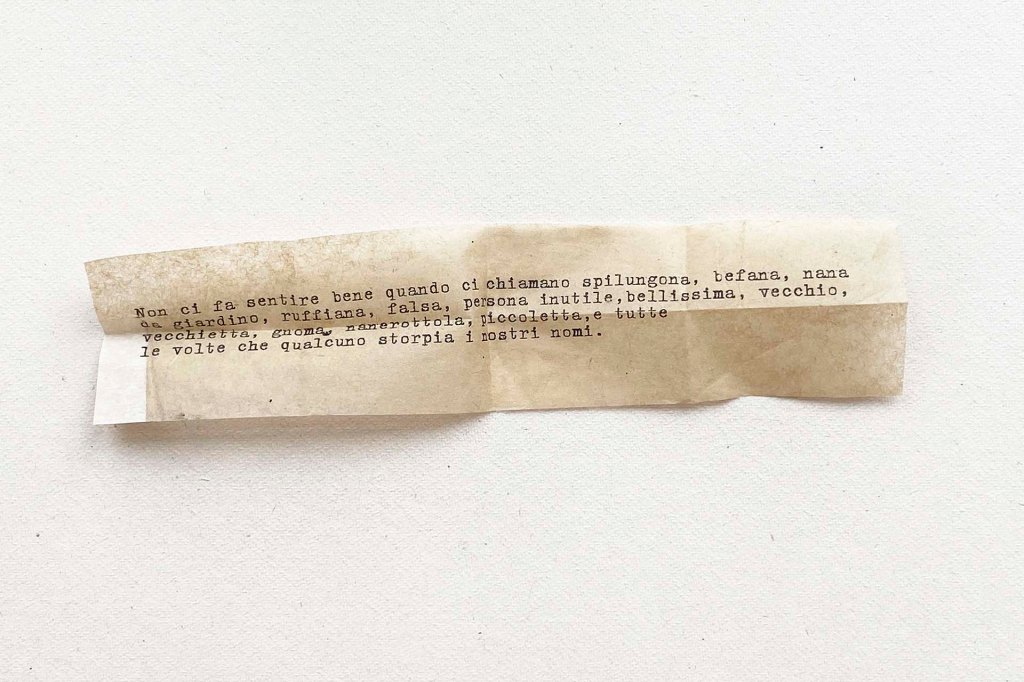
It contains the words they don’t like.
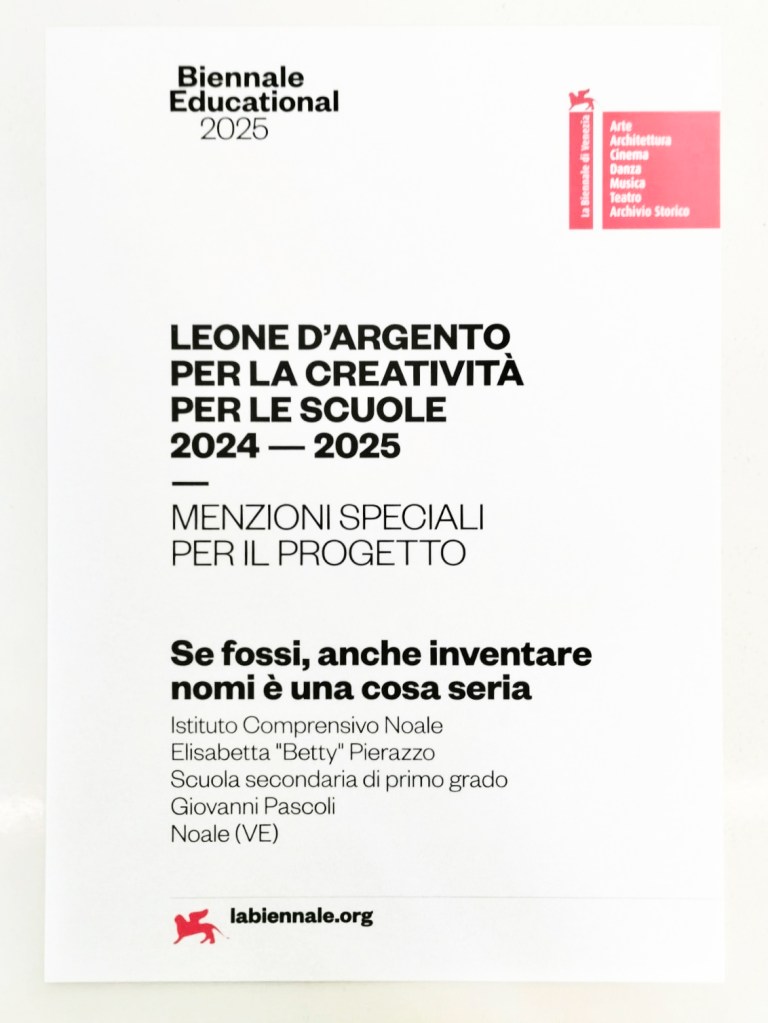
Here is the special mention the project received for the Leone d’Argento per la Creatività per le Scuole 2024–2025 from Biennale Educational.
Artist book created within the If I Were | Even inventing names is a serious matter workshop, developed for the advanced course in Reading and Literature for Children and Young Adults (ages 0–18) directed by Marnie Campagnaro at the University of Padua, 2024.
 Serena Pea